18K Gold: Purity, Price and Where It Is Used
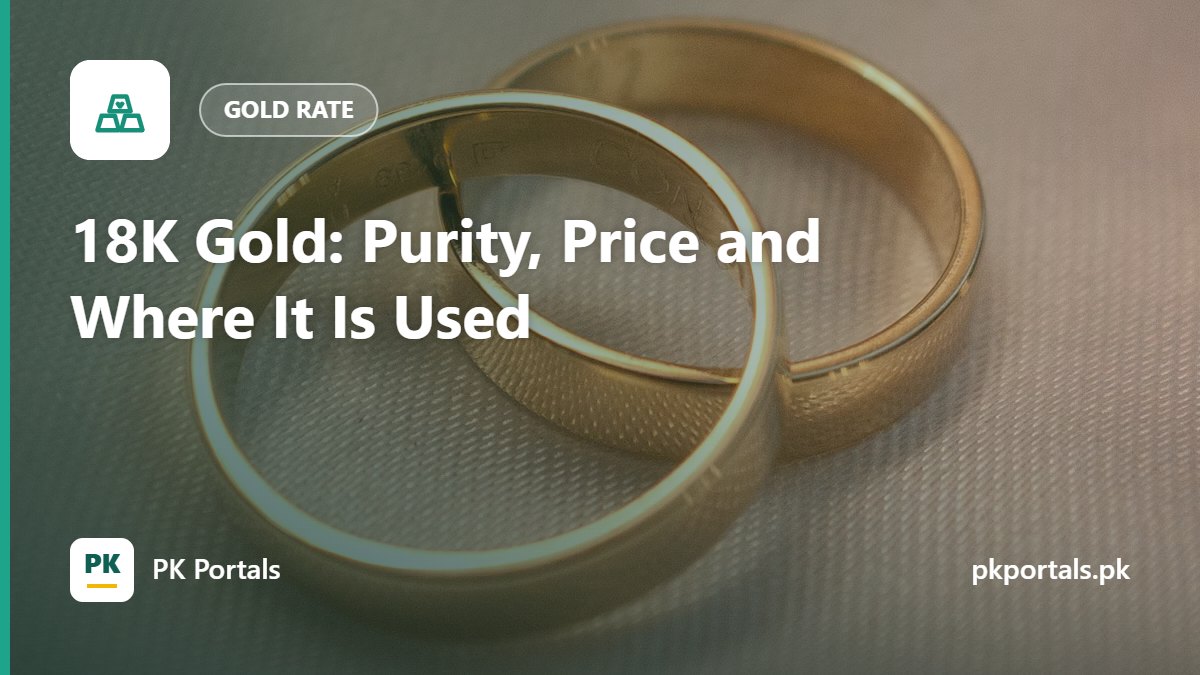
18K gold is an alloy that is 75 percent pure gold and 25 percent other metals such as silver, copper, zinc, nickel or palladium. It is harder and more scratch-resistant than 22K or 24K gold, which is why it is widely used for diamond rings, gemstone settings, white and rose gold jewellery and watches. In Pakistan its price is worked out from the 24K rate in proportion to its purity.
PK Portals is an independent information site and is not linked to any jeweller or sarafa association. Gold rates change several times a week, so check the latest rate announced by the All Pakistan Sarafa Gems and Jewellers Association in national newspapers, and confirm the 18K rate with the jeweller before you buy. All prices below are worked examples, not live rates.
Quick facts
| Item | Details |
|---|---|
| Gold content | 18 parts out of 24, or 75 percent |
| Purity stamp | 750 (sometimes shown as 18K or 18KT) |
| Other metals | Silver, copper, zinc; nickel or palladium in white gold |
| Colours | Yellow, white and rose (pink or red) |
| Main uses | Diamond and gemstone jewellery, rings, watches, fine chains |
| Price basis | 24K rate multiplied by 18/24 (0.75) |
| Strength | Harder than 22K and 24K, softer than 14K |
What 18K gold means
Gold purity is measured in karats out of 24. Pure gold is 24K, so 18K means 18 parts gold and 6 parts other metals, which equals 75 percent. The same purity is written as 750 in the millesimal system used on hallmarks and purity stamps, meaning 750 parts of gold per 1,000.
Pure gold is very soft and bends or scratches easily. Mixing it with other metals makes the alloy harder and allows jewellers to change its colour. The trade-off is that the lower the karat, the less gold you own per gram.
18K compared with other purities
| Purity | Gold content | Common stamp | Typical use in Pakistan |
|---|---|---|---|
| 24K | About 99.9 percent | 999 | Bars, biscuits, coins |
| 22K | About 91.7 percent | 916 | Traditional jewellery, bridal sets |
| 21K | 87.5 percent | 875 | Everyday and bridal jewellery |
| 18K | 75 percent | 750 | Diamond, gemstone, white and rose gold jewellery |
| 14K | About 58.5 percent | 585 | Less common; seen in some imported pieces |
Traditional Pakistani jewellery is mostly 22K or 21K, which gives the deep yellow colour many families prefer for bridal sets. 18K is more common in diamond jewellery, modern lightweight designs and branded or imported pieces. For a fuller comparison of the higher purities, see 24K vs 22K vs 21K gold.
How the 18K gold price is worked out
The sarafa association announces the 24K rate per tola and per 10 grams. Jewellers then work out the 18K price by multiplying the 24K rate by 0.75. The table below uses an example 24K rate of Rs 440,000 per tola to show the method.
| Purity | Per tola (example) | Per 10 grams | Per gram |
|---|---|---|---|
| 24K | Rs 440,000 | Rs 377,229 | Rs 37,723 |
| 22K | Rs 403,333 | Rs 345,793 | Rs 34,579 |
| 21K | Rs 385,000 | Rs 330,075 | Rs 33,008 |
| 18K | Rs 330,000 | Rs 282,922 | Rs 28,292 |
A tola is 11.664 grams, so the per-gram figure is the tola rate divided by 11.664. As a worked example, an 18K ring weighing 4 grams would have a gold value of about Rs 113,169 at the example rate above, before making charges and any stones. Shop rates for lower purities can differ slightly from the simple ratio, so always ask for the rate the jeweller is applying. The tola to gram guide and how the gold rate is calculated explain the units and formula.
Colours of 18K gold
Yellow gold
18K yellow gold is usually made by mixing gold with silver and copper. It is a lighter yellow than 22K and works well for gemstone settings.
White gold
White gold is made by alloying gold with white metals such as palladium or nickel. Most white gold jewellery is also plated with rhodium for a bright finish, and this plating can wear off over time and need redoing. Some people are sensitive to nickel, so ask whether a white gold piece is nickel-free if you have had skin reactions before.
Rose gold
Rose, pink and red gold get their colour from a higher share of copper. For example, a common 18K rose gold mix is 75 percent gold, about 22 percent copper and under 3 percent silver. Our guide to white gold vs yellow gold vs rose gold compares the three in more detail.
Pros and cons of 18K gold
Advantages:
- Harder than 22K, so it holds diamonds and stones more securely and scratches less.
- Lower price per gram than 22K or 21K for the same weight.
- Available in white and rose colours, not just yellow.
- Still has a high gold content compared with 14K or 9K.
Disadvantages:
- Less gold per gram, so the resale value of the metal is lower.
- Not the traditional choice for Pakistani bridal sets.
- White gold may need rhodium re-plating.
- When selling, stones are usually valued separately and may fetch much less than you paid.
Buying and selling 18K gold in Pakistan
- Confirm the purity in writing. The receipt should state 18K, the weight, the rate applied and the making charge separately.
- Look for a 750 stamp. A stamp is useful but not proof on its own, so test the piece if you have doubts. See the gold purity checking guide.
- Ask about stone weight. For diamond or gemstone pieces, check whether the stated weight includes the stones.
- Compare making charges. Detailed or branded designs often carry higher charges. The gold making charges guide explains common methods.
- Expect a deduction when selling. Jewellers test the purity and apply kaat. Our guide to selling gold in Pakistan covers the process.
For zakat, scholars differ on whether mixed-metal jewellery is assessed on its full weight or on its pure gold content, so consult a qualified scholar or mufti for your own case. The general rules are covered in our zakat on gold guide. This guide is general information, not financial or investment advice.
Related guides
- 24K vs 22K vs 21K gold: difference, purity and price
- White gold vs yellow gold vs rose gold
- Gold rate in Pakistan today: 24K, 22K and 21K price per tola
- How to check gold purity at home
- Tezabi gold meaning
- Selling gold in Pakistan: kaat deduction
Frequently Asked Questions
Is 18K gold real gold?
Yes. 18K gold contains 75 percent pure gold. The remaining 25 percent is made up of other metals that add strength and change the colour.
What does 750 mean on gold jewellery?
The 750 stamp means the item contains 750 parts of gold per 1,000, which is the same as 18K. It is a purity mark, but testing is still sensible if you are unsure about the seller.
How is the 18K gold price calculated in Pakistan?
Multiply the 24K rate by 0.75. For example, if 24K gold is Rs 440,000 per tola, 18K works out to Rs 330,000 per tola before making charges.
Is 18K or 22K gold better?
It depends on use. 22K has more gold and a deeper colour and is preferred for traditional jewellery, while 18K is stronger and better for stone settings and daily-wear rings.
Does 18K gold fade or tarnish?
18K yellow and rose gold do not rust, but they can lose shine and need cleaning. White gold may show a yellowish tint as its rhodium plating wears, which a jeweller can restore.